Hemp Flower Benefits for Daily Regulation
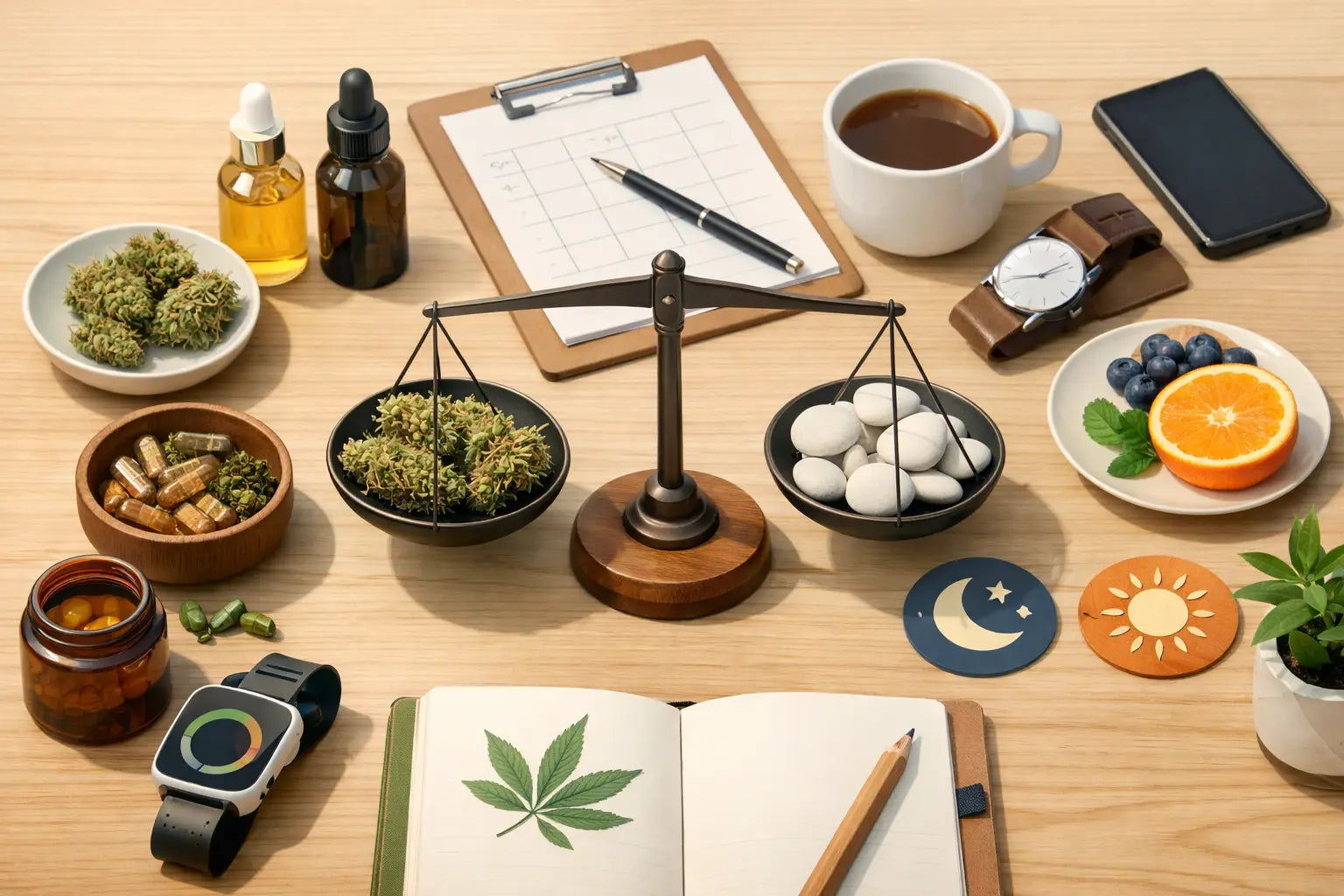
A well-grown hemp flower is not simply a raw material for CBD. It is a complete botanical matrix: cannabinoids, aromatic terpenes, flavonoids, and other plant compounds held in their original relationship. That is central to hemp flower benefits. The value is not only in the quantity of one compound, but in the quality and breadth of the plant’s cannabinoid profile and how that profile supports the body’s regulatory systems.
For people managing full schedules, physical demands, inconsistent sleep, or persistent mental load, hemp flower can offer a more nuanced way to support endocannabinoid tone. Its effects are shaped by cultivar, cultivation, harvest timing, storage, and preparation. That makes quality more consequential than a simple milligram number on a label.
Why Hemp Flower Benefits Begin With the Whole Plant
The endocannabinoid system is a body-wide signaling network involved in maintaining internal balance. It helps regulate functions that influence how we experience stress, rest, appetite, discomfort, mood, and recovery. The body produces its own endocannabinoids as needed, while plant-derived cannabinoids can interact with and support this system through several pathways.
Hemp flower contains cannabinoids in a naturally varied profile. CBD may be the most recognized, but it exists alongside compounds such as CBDA, CBG, CBC, and trace minor cannabinoids. Each has distinct biological behavior, and their value often lies in complementarity rather than isolation. A full-spectrum flower preserves more of that original complexity than a formula built around a single purified cannabinoid.
This is sometimes described as the entourage effect, though the practical point is more useful than the term itself: a layered botanical profile can produce a different experience from a single-compound extract. Terpenes may influence aroma, but they also contribute to the flower’s functional character. A bright, citrus-forward profile may feel mentally clarifying to one person, while a deeper, more resinous profile may be better suited to evening decompression. Individual response varies, but the chemistry is not incidental.
The flower format also preserves acidic cannabinoids, including CBDA, in their native state. Heat changes these compounds through decarboxylation, which is useful in some preparations but not always preferable. A thoughtfully made hemp flower extract can be designed to retain specific ratios of neutral and acidic cannabinoids, creating a more intentional profile for daytime regulation, physical recovery, or nighttime support.
Support for Calm Without Flattening the Day
One of the most relevant hemp flower benefits is support for a more settled stress response. Modern stress is rarely limited to a single acute event. It is the accumulation of alerts, decisions, deadlines, travel, screens, and the expectation of constant availability. Over time, that load can leave the nervous system less adaptable, even when nothing is overtly wrong.
Cannabinoids may help support the pathways involved in stress regulation and emotional steadiness. For many people, the desired outcome is not sedation. It is a quieter baseline: fewer sharp edges around ordinary demands, greater patience during transitions, and the ability to stay present without feeling overactivated.
The best profile depends on context. A person seeking composure before a demanding workday may prefer a formulation that emphasizes CBD, CBG, and select uplifting terpenes. Someone whose tension accumulates late in the day may respond better to a broader, more grounding profile. The goal is not to suppress normal feeling. It is to support a regulatory system that can move through stress and return to baseline more efficiently.
Hemp Flower Benefits for Recovery and Mobility
Physical recovery is another area where cannabinoid-rich flower has practical relevance. Training, travel, desk work, and repetitive movement can all create a sense of strain that changes how freely the body moves. Cannabinoids interact with signaling systems involved in discomfort perception, inflammatory balance, and muscle tension, making them useful tools within a larger recovery practice.
A full-spectrum hemp flower profile may be especially valuable here because recovery rarely involves one pathway. CBD, CBG, CBC, and terpenes can each contribute a different layer of support. Rather than approaching physical discomfort as a simple on-off problem, a broader profile is designed to support the conditions that help the body feel more comfortable and responsive.
Timing matters. Some people find that cannabinoid support works best as a consistent part of their routine, particularly after physical exertion or at the end of a long workday. Others prefer it only when their system feels taxed. Neither approach is universally better. Regular use can help establish a clearer sense of personal response, while situational use may be appropriate for people with changing schedules or needs.
Hemp flower is not a substitute for sleep, hydration, sensible training progression, or clinical care when needed. It can, however, be a precise botanical addition to a recovery system built around those fundamentals.
Better Sleep Often Starts Earlier Than Bedtime
Sleep support is often reduced to the question of whether a product makes someone drowsy. That is too narrow. Productive sleep depends on the ability to downshift from stimulation, physical tension, and unfinished mental activity. Hemp flower may support this transition by helping regulate the conditions that make rest more available.
For evening use, cannabinoid and terpene selection matters. Some profiles are better suited to a calm, settled state, while others may feel too mentally bright or activating near bedtime. The amount used matters as well. More is not automatically more effective. A measured dose that supports a gradual shift in state is often more useful than a large, inconsistent amount.
It is also worth separating sleep onset from sleep continuity. A person may fall asleep easily but wake feeling unrestored, while another may struggle to disengage from the day in the first place. These patterns can call for different routines and different cannabinoid profiles. Keeping brief notes on timing, amount, food intake, and perceived effects can make formulation choices more informed over time.
The Case for Cultivation and Processing Standards
The quality of hemp flower begins before extraction. Hemp is a bioaccumulator, meaning it can take up compounds from the soil. Organic cultivation, careful soil management, clean water practices, and third-party testing are therefore practical standards, not aesthetic ones. The same applies to post-harvest handling. Poor drying, excessive heat, light exposure, or long storage can reduce aromatic compounds and alter cannabinoid integrity.
Look for transparency around cannabinoid potency, terpene content, pesticide screening, heavy metals, microbial testing, and residual solvents when an extract is involved. A certificate of analysis should confirm what a product contains, but a strong formulation goes further. It should show judgment about which cannabinoid ratios and plant compounds belong together for a given outcome.
This is where flower-derived products differ meaningfully. A product can list CBD on the front and still offer a narrow chemical profile. A carefully preserved, full-spectrum hemp extract retains a broader range of compounds and gives the formulator more to work with. At Organic Green Roots, that principle informs the use of purposeful cannabinoid profiles rather than treating every hemp ingredient as interchangeable.
How to Use Hemp Flower Thoughtfully
Cannabinoids are active botanical compounds, so a deliberate approach is appropriate. Start with a modest amount and use it consistently enough to observe the result. Effects can vary with body size, metabolism, sensitivity, timing, whether food is present, and the rest of a person’s routine. The right amount is the one that supports the intended outcome without making the experience feel heavy or distracting.
Choose the format based on your goal. An oil or tincture can make it easier to adjust serving size precisely. A capsule offers consistency and convenience. A raw or minimally heated preparation may better preserve acidic cannabinoids, while a decarboxylated extract will emphasize a different cannabinoid profile. The most useful choice is not the most complicated one. It is the one whose composition and timing fit the role you want it to play.
If you use prescription medication, are pregnant or nursing, or have a complex health history, speak with a qualified clinician before adding cannabinoids to your routine. This is not a statement against their value. It reflects the fact that meaningful plant compounds deserve the same care and attention as any other biologically active supplement.
The most compelling reason to consider hemp flower is its capacity for specificity. When cultivation is clean, the profile is preserved, and the formula is matched to a real daily need, hemp becomes less about chasing a dramatic effect and more about supporting the body’s ability to regulate, recover, and remain capable under pressure.