
Can Hemp Help Inflammation? What Science Suggests
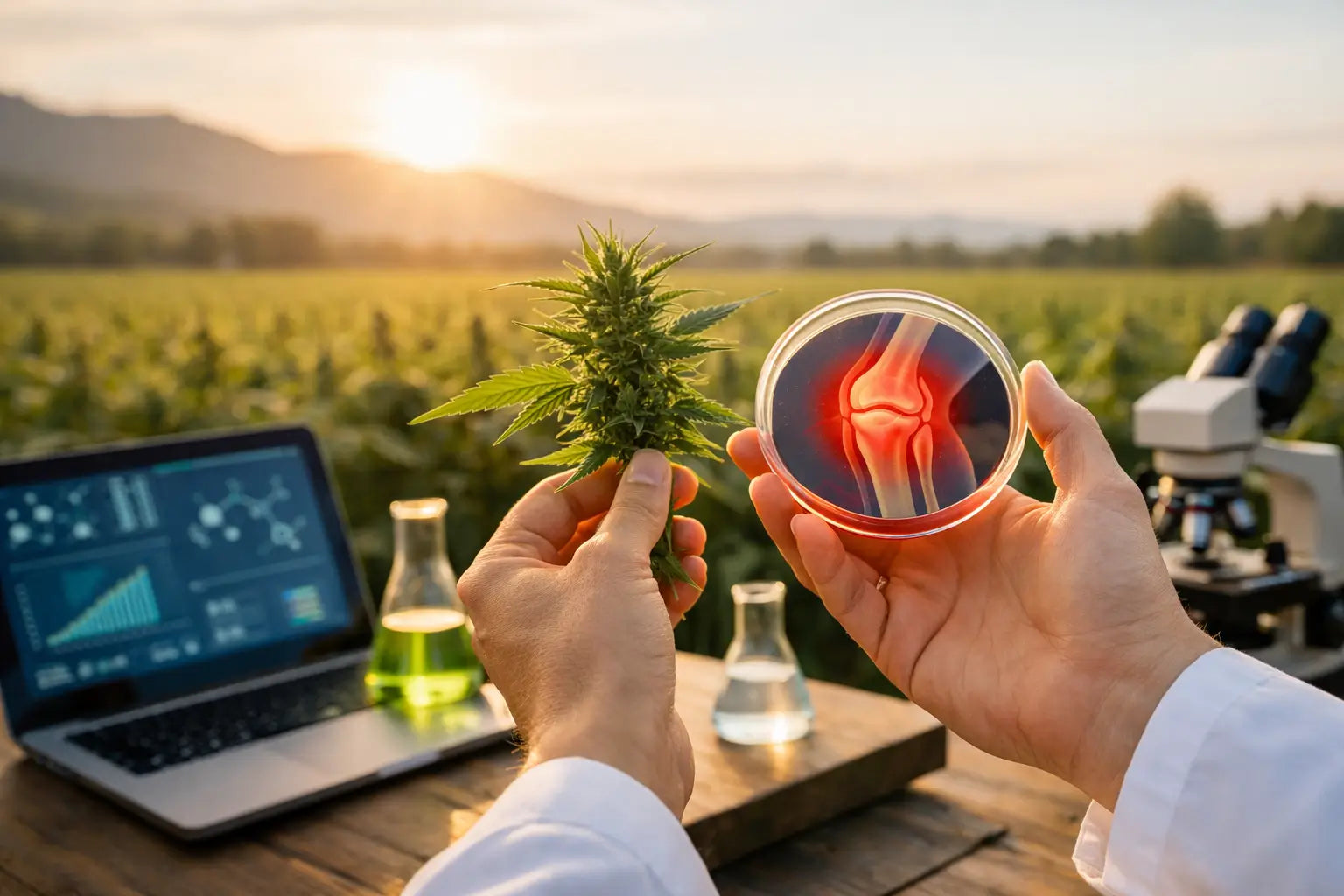
Inflammation is not simply something to switch off. It is part of how the body responds to training, minor injury, environmental stress, and everyday wear. The more useful question is whether the response resolves appropriately. Can hemp help inflammation? For many people, a well-designed hemp cannabinoid formulation may support the regulatory systems involved in that process, particularly the endocannabinoid system.
That distinction matters. Hemp is not a substitute for evaluating persistent pain, swelling, or a new health concern. It is, however, a sophisticated botanical source of cannabinoids and terpenes that may help support comfort, mobility, recovery, and a more balanced inflammatory response over time.
Can Hemp Help Inflammation Through the Endocannabinoid System?
The endocannabinoid system is a body-wide signaling network involved in maintaining internal balance. Its receptors, enzymes, and naturally produced endocannabinoids help regulate processes that include immune activity, pain signaling, sleep, stress response, and tissue recovery.
When the body is under sustained physical or mental load, endocannabinoid tone can be affected. Endocannabinoid tone describes the availability and signaling efficiency of the body’s own cannabinoids. Hemp-derived cannabinoids interact with this system in several ways: by influencing receptor activity, supporting the signaling environment around those receptors, and affecting enzymes that break down endocannabinoids.
CBD is the best-known hemp cannabinoid, but it is not the only relevant compound. CBG, CBC, CBDA, and other minor cannabinoids have distinct pharmacological profiles. Terpenes - the aromatic compounds found in hemp and many other plants - can also contribute to a formulation’s effect through their own interactions with inflammatory and sensory pathways.
This is why hemp extracts should not be viewed as interchangeable. A formula built around a thoughtful cannabinoid profile may provide broader upstream support than a generic isolate chosen only for a large number on the label.
Inflammation Has a Job, Until It Does Not Resolve Well
Acute inflammation is a normal biological response. After a demanding workout, a long day on your feet, or a minor strain, local signaling helps direct resources to the area and supports adaptation. The goal is not to eliminate that response. The goal is to support a return to equilibrium.
Problems often arise when the body is repeatedly asked to operate under strain without enough recovery. Poor sleep, high stress, sedentary work, frequent intense exercise, alcohol, and an inconsistent diet can all shape inflammatory signaling. This is one reason a person may feel generally stiff, tender, or slow to recover even without a single obvious cause.
Hemp cannabinoids may be especially relevant here because the endocannabinoid system sits at the intersection of several of these inputs. Supporting endocannabinoid tone may help the body regulate the signals associated with discomfort and recovery rather than merely masking them.
Research on cannabinoids and inflammatory pathways continues to develop. Preclinical research has shown that cannabinoids can influence immune-cell signaling, oxidative stress, and mediators involved in the inflammatory response. Human evidence is still more variable, in part because studies use different cannabinoid types, doses, delivery methods, and populations. Still, the biological rationale is strong, and real-world use has made cannabinoids a meaningful tool for people seeking more consistent physical comfort.
The Cannabinoid Profile Matters More Than a Single Ingredient
A hemp product’s usefulness depends on more than whether it contains CBD. The extract type, cannabinoid ratios, terpene content, dose, and consistency all affect the experience.
CBD and broader regulatory support
CBD has a wide range of indirect actions within the endocannabinoid system and beyond it. Rather than acting as a simple on-off switch, it can influence multiple pathways related to stress signaling, sensory perception, and immune balance. This broad activity helps explain why CBD is often used as a foundational cannabinoid in formulas intended for daily recovery and comfort.
CBG, CBC, and acidic cannabinoids
Minor cannabinoids deserve attention because they can complement CBD rather than duplicate it. CBG has a different receptor affinity and is being studied for its relationship to inflammatory and discomfort pathways. CBC also has a distinct profile, while raw-form cannabinoids such as CBDA may interact with enzymes and receptors involved in inflammatory signaling.
A multi-cannabinoid formula is not automatically better simply because it contains more compounds. The benefit comes from intentional ratios, stable sourcing, and enough of each cannabinoid to have a practical role in the formulation.
Terpenes as part of the formula
Terpenes are often treated as an afterthought, but they help define the character of a full-spectrum or broad-spectrum extract. Certain hemp-derived terpenes are being studied for their effects on inflammatory signaling, muscle tension, and sensory pathways. Their presence can make a formula feel more complete, particularly when they are preserved and standardized rather than added only for flavor.
What Results Can Feel Like in Daily Life
Hemp support is typically subtle and cumulative, not dramatic. The useful signs are often practical: less stiffness after sitting for hours, easier movement in the morning, more comfortable recovery after exercise, or a lower sense of physical tension at the end of the day.
For some people, the most noticeable benefit is indirect. Better sleep can improve the body’s recovery capacity. A calmer stress response can reduce the feeling of being physically braced all day. When cannabinoid support helps these systems operate with less friction, inflammation-related discomfort may feel more manageable.
Results depend on the person and the source of the discomfort. A weekend athlete managing post-training soreness has different needs than someone dealing with recurring joint stiffness from years of repetitive work. Frequency, dose, product format, sleep quality, movement habits, and overall health all shape the outcome.
How to Use Hemp More Intentionally for Recovery
Consistency is usually more informative than taking a cannabinoid product only on difficult days. A daily routine gives the body a steadier cannabinoid input and gives you a clearer sense of whether the formula is supporting your baseline comfort.
Start with the manufacturer’s suggested serving and use it consistently for at least one to two weeks before making large changes. Sublingual oils are often useful when you want flexible dosing and a relatively quick onset. Capsules can fit a more structured routine. Topical hemp formulations may be useful for targeted areas, although their local effect differs from the whole-body support of an ingestible product.
Track a few concrete markers instead of asking whether you “feel” the product. Notice morning mobility, recovery after activity, sleep continuity, or how your body responds to a long workday. This approach is more reliable than expecting an immediate, dramatic shift.
Hemp works best as part of a recovery environment. Adequate protein, regular movement, hydration, sleep, and deliberate variation in training load all influence inflammatory balance. Cannabinoids can be a precise addition to that foundation, not a replacement for it.
Quality Is Part of the Biological Equation
The hemp category varies widely in raw material quality and formulation standards. A product should clearly identify its cannabinoid content, use third-party testing for potency and contaminants, and provide enough transparency to understand what is actually in each serving.
Organic cultivation can matter because hemp is a bioaccumulator, meaning it can take up compounds from the soil. Clean growing practices, careful extraction, and small-batch quality control help protect the integrity of the final cannabinoid profile. For a compound intended to interact with a regulatory system, this level of precision is not cosmetic.
It is also wise to review hemp use with a qualified clinician or pharmacist if you take prescription medications, are pregnant or nursing, or have a health condition requiring ongoing care. Cannabinoids can affect how some medications are metabolized, and an informed plan is always preferable to guesswork.
The most productive way to think about hemp and inflammation is not as a rescue product, but as support for regulation. A carefully made cannabinoid formula may help the body return to a steadier baseline - one where movement, rest, and recovery ask less of your attention.